
Ask ten business owners what their brand is, and most will point at their logo. It is an easy mistake to make, because the logo is the part you can see, print and put on a sign. But it leads to expensive decisions, so it is worth getting the answer straight.
The short answer: the logo is not the brand, and the brand is not the logo. The logo is one part of the brand, the part that stands in for the rest.
The short answer
A logo is a sign. It tells people who you are at a glance. A brand is what people expect, feel and say about you once they know you: how the place looks, how it sounds, how staff treat guests, what the food or the room is like, and whether all of that stays the same from one visit to the next.
Put simply, a logo identifies a business. A brand is the reputation that the logo points to.
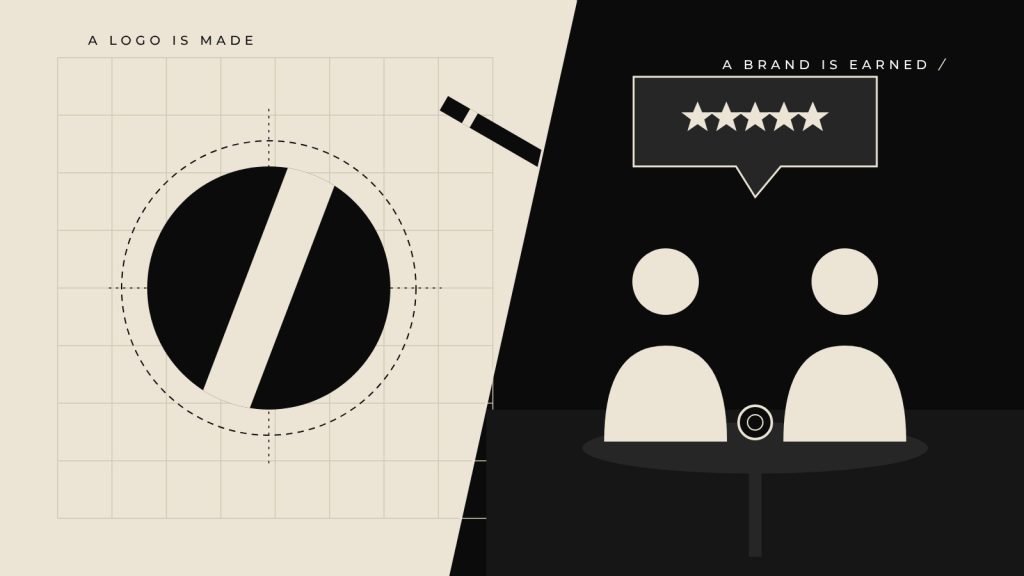
A logo is made. A brand is earned.
You can commission a logo in a few weeks. You cannot commission a reputation. A brand forms in the mind of each guest, one visit at a time, and no designer can decide it for them. What a designer and a business can do is shape it, by making deliberate choices about what the place stands for and then keeping every part of the experience in line with it.
That is why a great logo cannot rescue a poor experience. A restaurant with a beautiful mark and slow service will be remembered for the slow service. On the other side, a small place with a very plain sign and warm, consistent hospitality can have a strong brand. The logo does not create the quality. It makes it recognisable.
So what does the logo actually do?
Think of a signature on a letter. The signature is not the person, but it carries the person’s name and everything that people know about them. A logo works the same way. Its job is to be easy to recognise and to carry the associations that the business has built.
When the brand is strong, the logo gains meaning over time. When the brand is weak or confused, even a well-drawn logo has little to point to.
Where the logo ends and the brand begins
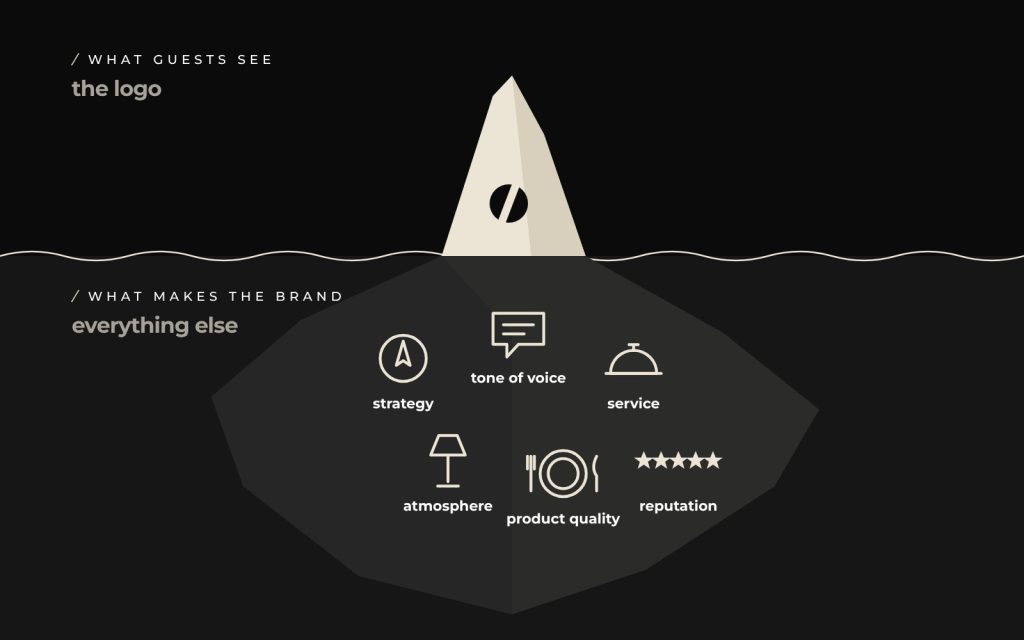
In hospitality this is easy to see. A guest meets your business in many places, and the logo appears in only some of them. It is on the sign, the menu, the uniform, the website, the packaging. But the guest also meets the brand in how the staff greet them, in the music and the lighting, in how quickly the food arrives, in what other guests write about you, and in the tone of your captions on Instagram.
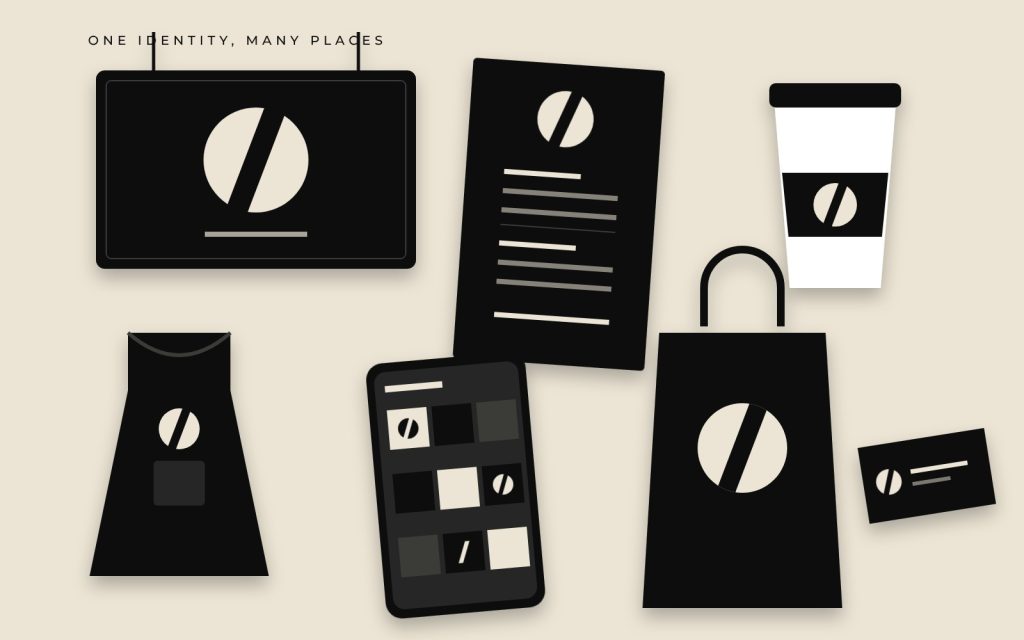
If the logo is the only thing you designed, the places without a logo are left to chance.
What happens when a business only has a logo
- Every supplier makes their own decisions about colours, fonts and tone, so the menu, the website and the signage start to look like they belong to different places.
- The owner cannot explain in one sentence what the place stands for, so the team cannot either.
- New ideas are copied from competitors, because there is no clear idea of what is yours.
- The logo gets redrawn every few years because it was never connected to a clear direction.
What changes when branding comes first
When the thinking is done first, the logo becomes an easier job. The designer knows who the guests are, what the place should feel like and what it must never look like, so the brief is clear and decisions are faster. The same direction then guides the menu, the website, the photography and the way the team speaks, which is what makes a business feel like one thing instead of many.
Which one do you need?
- A logo only, if you already know exactly who you are and how you sound, and only the mark is outdated or missing.
- Branding, if you are opening something new, repositioning, or you feel that your materials do not look like they come from the same place.
- Both, in most cases of a new venue. The logo is then designed as part of the system rather than on its own.
A quick test you can do today
Cover your logo with your hand and look at your menu, your Instagram and your website, then ask yourself three questions:
- Would a guest still recognise it as you, from the colours, the style of the photos and the way you write?
- Can everyone on your team say in one sentence what the business stands for?
- Do your sign, your menu and your website look as if they come from the same place?
If the answer to any of them is no, the problem is probably not your logo. It is the brand behind it.
How we can help
If you need the thinking and the whole system, see our branding services. If you already have a clear direction and only need the mark, we also do logo design on its own. Either way, we will tell you honestly which one fits your business, even if that means the smaller job.
FAQ
Is a logo a brand?
No. A logo is one visible part of a brand. The brand is the whole set of expectations, feelings and memories that people have about a business, and the logo is the shortcut that brings them to mind.
Which comes first, the logo or the brand?
The thinking comes first. A brand exists as soon as people have an opinion of your business, even if you have no logo. It is better to decide what you want that opinion to be, and then design the logo to carry it.
Can I have a brand without a logo?
Technically yes, because a reputation exists with or without a mark. In practice a clear logo makes the brand much easier to recognise and remember, so most businesses want both.
Will a new logo change how guests see my business?
Only if what stands behind it changes too. A new logo placed on the same experience is a cosmetic change. Guests judge the service, the product and the atmosphere, and those need to move together with the logo for a real shift.
Is branding only for large companies?
No. A small restaurant or villa benefits as much as a large group, because guests judge the whole experience. The scope changes with the size of the business, not the principle.